1. Raw Material Preparation: Fabric and Rubber
Gaming mouse pad production starts with two foundational materials: surface fabric and base rubber. Two main fabric textures are used: low-friction Speed cloth and high-grip Control cloth. Speed products are chosen by FPS players doing wide sweeping movements at low DPI; Control products serve strategy and precision-focused players. As a buyer, stocking both textures keeps the target market broad.
The base material is natural rubber. Premium segment uses 3–5mm thickness; entry segment uses 2–3mm. Natural rubber quality determines how stable the pad sits on the desk and how long it lasts. At Atak Gaming, all rubber sourcing is from certified sustainable suppliers.
2. Design Preparation and Color Profile
Pre-production design files define print quality. Accepted formats are AI, PDF, PSD, and high-resolution PNG. CMYK color profile is mandatory for sublimation accuracy — RGB-profile files cause noticeable tonal shifts in the final print.
B2B buyers commonly leverage the manufacturer’s design support at this stage. Atak Gaming’s design team prepares free mockups, applying brand logo, corporate colors, and typography guidelines to produce a print-ready file. This adds 2–3 days to the first order timeline but reduces error cost to zero.
3. Sublimation Printing Stage
The standard printing technology for gaming mouse pads is sublimation. Ink is first printed onto a special transfer paper, then transferred to the fabric surface under high temperature (180–200°C) and pressure. The ink penetrates the fabric fibers and bonds with the surface. Result: a fade-resistant, scratch-resistant, washable print.
Atak Gaming uses 600 DPI sublimation printing — photo-quality detail, sharp typography, and a wide color gamut. UV printing is reserved for PVC promotional series; for premium gaming pads, sublimation is the only viable option.
Manufacturer tip: Sublimation works only on light-colored fabric. Dark or black designs print correctly via sublimation; white or very light backgrounds may show tone shifts. Plan designs accordingly.
4. Cutting and Edge Finishing
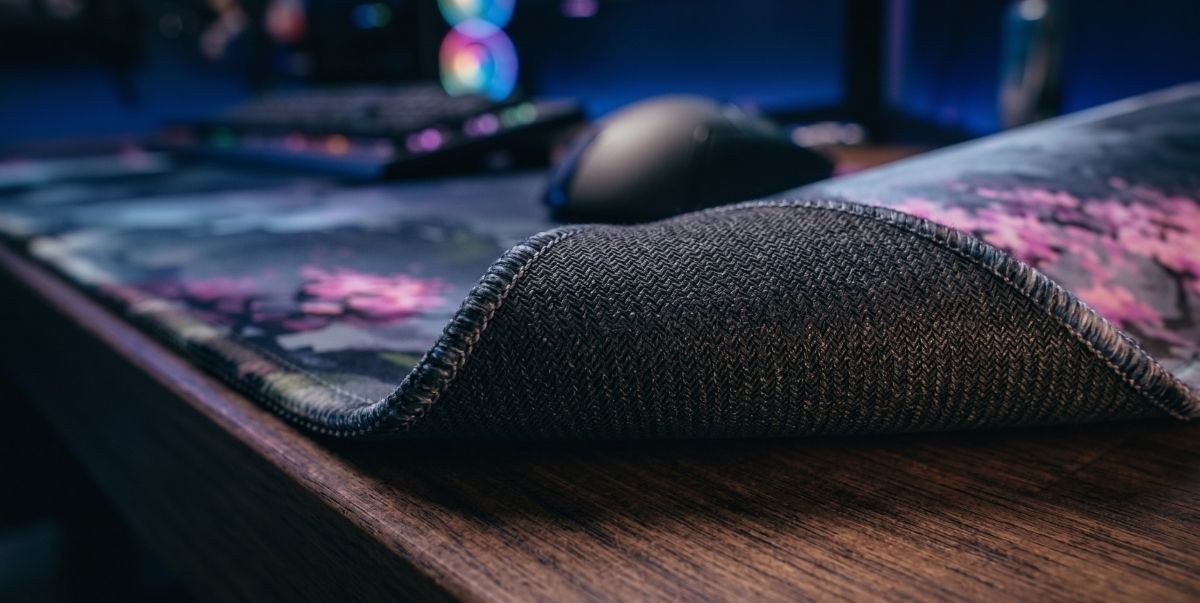
After printing, products are cut to size using hydraulic presses or CNC machines. Two edge finishing options exist: flat edge (cold-seal cut) and stitched edge (overlock).
Flat-edge products fit the budget segment — short production time, low cost. Stitched-edge (overlock) products are the premium standard. Overlock stitching protects fabric edges from fraying and prevents print delamination. Cost impact is roughly 8–12% higher but enables a 20–35% retail price premium.
5. Multi-Stage Quality Control
Atak Gaming applies QC in three stages. First: raw material intake — fabric, rubber, and ink batches audited to ISO 9001 standards. Second: post-print sampling — 5% of each batch is checked for color accuracy, print sharpness, and edge integrity. Third: pre-packaging — every single unit goes through visual inspection.
This process keeps shipped defect rate below 0.5%. For distributors, working with manufacturers whose defect rates exceed 1% silently erodes margin.
6. Packaging and FBA-Ready Shipping
The final stage is packaging. Three main options for B2B orders: polybag (e-commerce), carton box (retail shelf), and gift box (premium gifting). For Amazon FBA sellers, Atak Gaming provides barcoded, FNSKU-labeled, FBA-compliant packaging — ready for direct Amazon warehouse intake.
Standard production time after design approval is 7–14 business days. Orders of 5,000+ units may extend to 21 days. Express options can deliver in 5 days.
Get a direct factory quote
Detailed wholesale quote within 24 hours — directly from the OEM/ODM manufacturer.