1. Surface Fabric: Two Main Textures
Speed Fabric
Speed textures are thin, flat-woven surfaces. Low friction coefficient enables fast, low-resistance mouse glide. Preferred for FPS, battle royale, and racing — game types that benefit from wide sweeping motion. Roughly 62% of professional players use Speed surfaces.
In production, Speed fabric uses tight weave so unit cost is 5–8% higher; however, sublimation print delivers sharper color transitions and smoother line quality.
Control Fabric
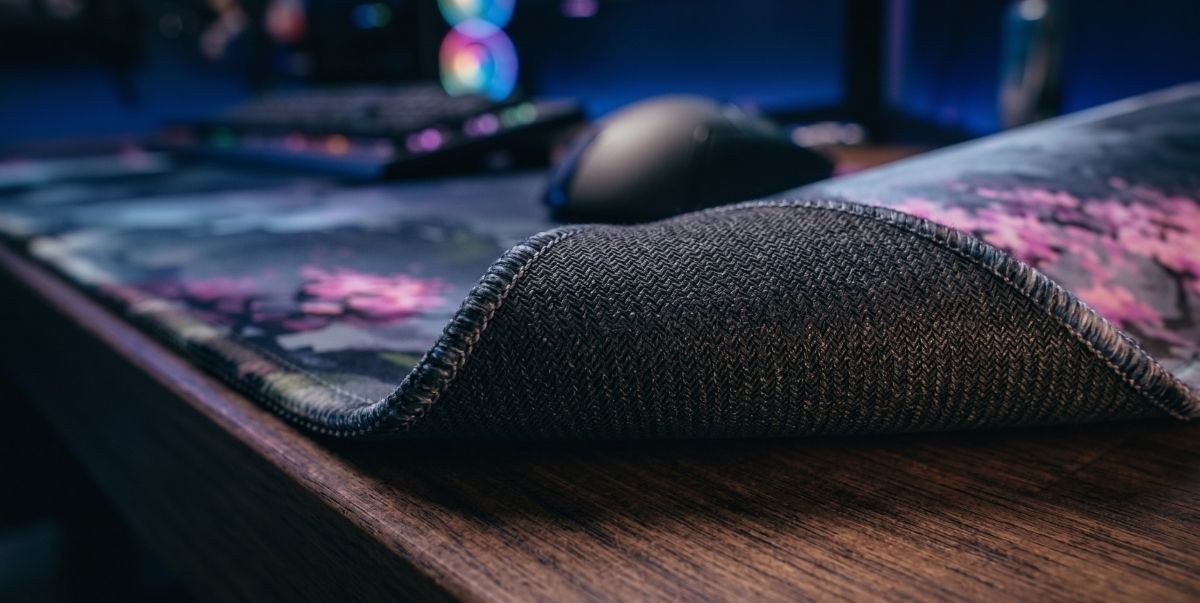
Control textures are denser, slightly thicker weaves. Higher friction enables precise, controlled mouse motion. Preferred for strategy, MOBA, sniper FPS, and pixel-precise work. Around 30% of professional players choose Control.
Control fabric is denser and longer-lasting; however, in sublimation print, color saturation is 5–7% lower than Speed. Not perceptible in detailed designs, but noticeable in flat color fields.
Market data: Hybrid "Speed-Control" surface products are growing 18% annually as of 2026. Worth considering as a catalog diversification option.
2. Base Rubber: Natural vs Synthetic
Premium gaming mouse pads use 100% natural rubber bases as standard. Synthetic rubber is 20–25% cheaper but trails natural rubber in slip resistance, vibration absorption, and durability.
Thickness Options
- 2 mm: budget segment, light and foldable
- 3 mm: mid-tier standard, most commonly used
- 4 mm: premium standard, optimum vibration damping
- 5 mm: ultra-premium, for esports tournament desks
Atak Gaming carries 3–5 mm natural rubber across all product lines. Distributor recommendation: a 3mm + 4mm combination performs best in first-order market tests.
3. Edge Finishing: Flat vs Overlock
Mouse pad edges are finished two ways: flat edge (cold-seal cut) and overlock stitched. Flat-edge processing cuts the fabric and rubber together then seals or heat-bonds the edge. Suitable for budget segment but edges may delaminate over time.
Overlock stitching wraps the fabric edge with multi-layer thread, reducing edge degradation by 60–80% and providing a premium quality feel. As of 2026, overlock is the market standard.
4. Water Resistance and Washability
Water resistance depends on the surface fabric coating method. Sublimation print naturally seals the surface and provides mild water resistance. For full washability, an additional anti-stain / anti-spill coating is applied. This coating adds 3–5% to unit cost and serves as a strong retail marketing feature.
5. Total Material Cost Impact on Unit Pricing
For a standard 300×250 mm gaming mouse pad, material cost breakdown: surface fabric 35%, natural rubber base 30%, sublimation ink 8%, overlock edge finishing 12%, packaging 10%, other 5%. Choosing premium materials raises total unit cost by 15–20% on average and enables 35–50% retail premiums.
Get a direct factory quote
Detailed wholesale quote within 24 hours — directly from the OEM/ODM manufacturer.